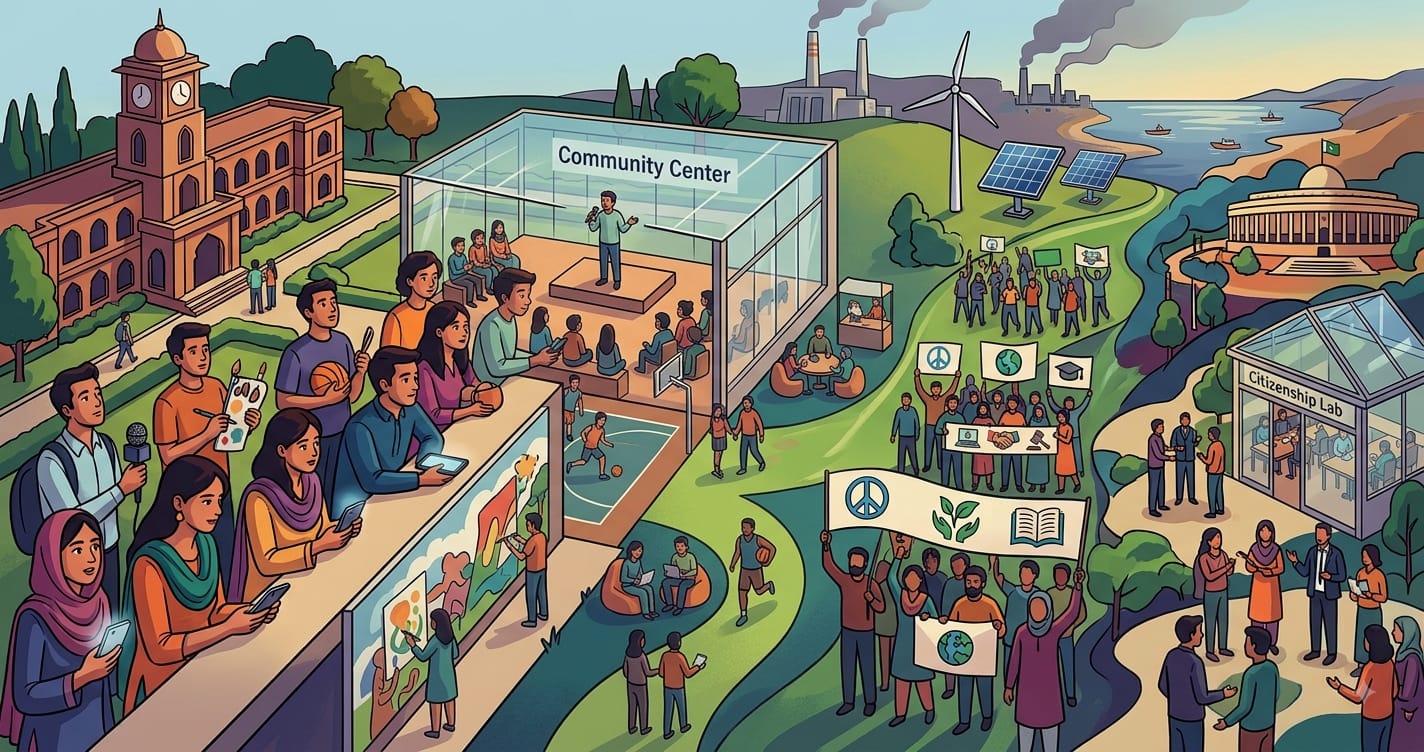
Young people have energy, curiosity and hopes for the future. Schools and universities can direct these through sport, the arts, debates, voluntary work, student societies and political activity. When such opportunities are missing, young people are left to find their own outlets, often alone or online.
They are also becoming less confident about the future. An August 2026 WIN–Gallup survey found that 63 percent of young people worldwide felt hopeful about their future. The figure for Pakistan was slightly higher, at 65 per cent. But this hope appears uncertain: 44 percent of Pakistani youth said they would consider leaving the country, while 26 percent believed they had fewer opportunities than their parents.
Some of this disappointment is shared by young people around the world. During much of the twentieth century, communism, socialism, social democracy, anti-colonial nationalism and pan-Islamism promised a different and supposedly fairer future. These movements had serious flaws, and some became repressive, but they gave young people causes larger than themselves. They helped them connect their personal problems with questions of power, inequality, freedom and justice.
Those promises have faded, but nothing equally convincing has replaced them. Economies continue to pursue endless growth by using up natural resources and widening the gap between rich and poor. Climate change makes the problem plain. Young people are told to prepare for the future while the present economic system is damaging the planet on which that future depends.
This tension is even sharper in the Global South, where unemployment, weak public services and climate disasters exist alongside extreme wealth. Pakistan adds another problem: its young people have few places where they can learn how to participate in public life.
How is Pakistani campus life different from the 20th century?
A university should do more than sell degrees. It should teach students how to ask questions, discuss differences, choose representatives, negotiate with those in authority and take part in decisions that affect them. Pakistani universities largely provide classroom instruction while discouraging these other forms of learning.
Education is becoming increasingly expensive, yet students are rarely treated as members of the institutions in which they study. They have little or no say in decisions about fees, accommodation, harassment, discipline, academic rules or campus services. University administrations have wide powers over attendance, examinations, grading and discipline. Students have almost no collective means of questioning how these powers are used.
Universities also continue to treat adult students as children. Parents may be summoned over disciplinary matters even though university students are adult citizens. Parents are treated as customers paying for a service, while students are treated as dependants receiving it. Neither arrangement recognizes students as members of an academic community with rights and responsibilities of their own.
Political activity is often expressly restricted. Admission forms and undertakings used by several universities require students to stay away from political parties, student federations and unions. Such conditions go beyond preventing violence or party interference. They also deny students the chance to practise peaceful association, representation, negotiation and organized disagreement. These restrictions are rarely challenged in court, even though they appear to limit constitutionally protected rights.
This does not make campuses free of politics. Administrations exercise power, teachers work within hierarchies, patronage operates and informal student groups remain active. What is missing is open and accountable student politics. Without elected unions, students may organize through temporary campaigns, party-linked groups, ethnic or religious organizations and social media. But the wider student body has no regular way to choose representatives or hold them answerable.
Debating competitions, festivals, student societies and volunteer programmes cannot fill this gap. They may offer useful experience, but they operate within limits set by university management. Students may be encouraged to speak, perform and volunteer, but not to question fees, rules or the use of university authority. Participation is welcome as long as it remains harmless.
Young Pakistanis are not cut off from politics. Through their phones, they see injustice, conflict, privilege and repression. They discuss elections, gender, religion, climate change, censorship, enforced disappearances and inequality. But access to information does not teach them how to organize, reach agreement or act together.
Social media can spread information, express anger and connect people quickly. It cannot, on its own, train leaders, resolve disagreements, protect participants or preserve the lessons of earlier struggles. Thousands of followers do not make an organization, and a trending topic does not create a movement. Once public attention shifts, much of the activity fades away.
The problem, therefore, is not that young people lack interest or awareness. They are being informed about politics without being allowed to practice it. Our universities prepare them for examinations and employment, but not for citizenship. That is the missing campus training.