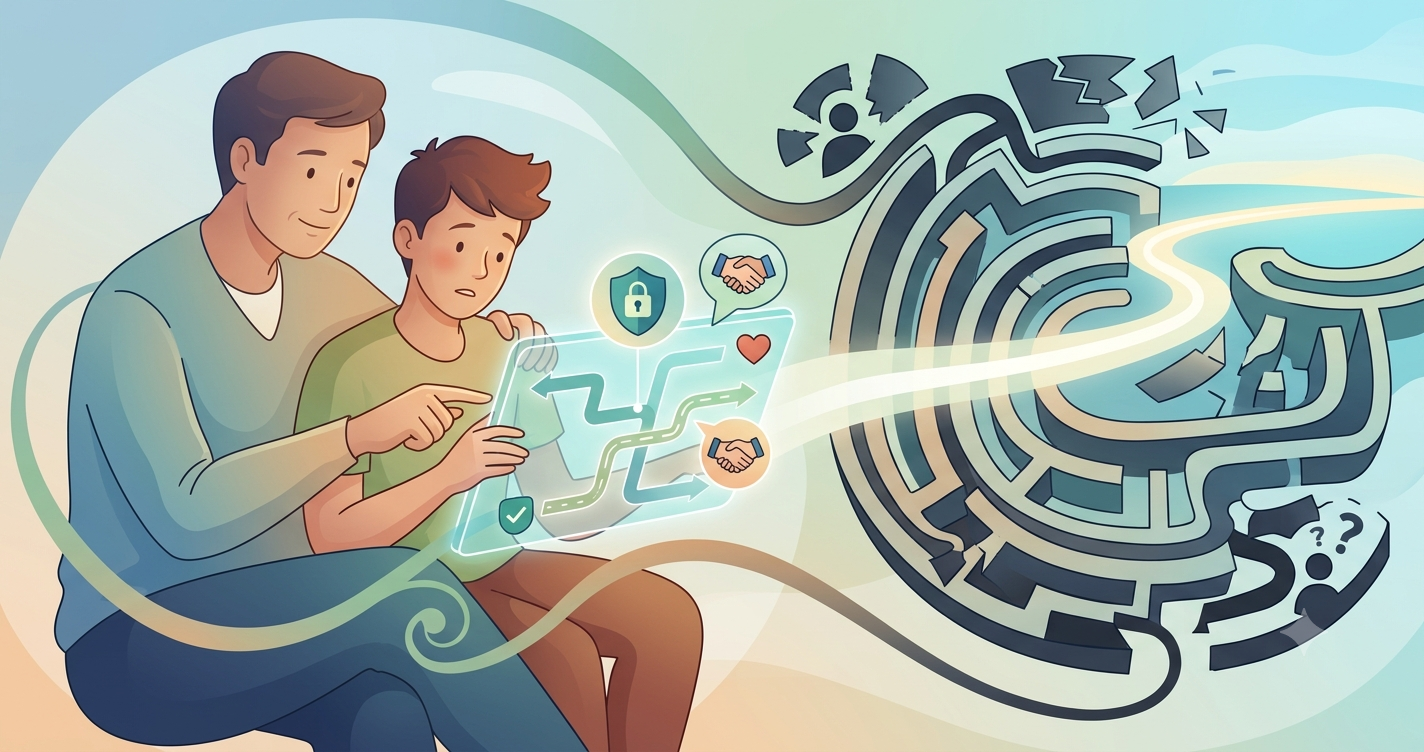
Anonymous messaging may seem harmless. Your child may simply want to ask embarrassing questions, get honest feedback, or enjoy the freedom of communicating without signing every message with their name.
For you as parents, the main question is whether you understand how anonymity changes a conversation, and whether you can help your children recognise when a private, anonymous conversation becomes dangerous.
Anonymous communication offers some benefits in terms of privacy. However, these platforms are also full of people who keep their identities hidden. So how can you be sure that the person your child shares private information with will not misuse it for harmful purposes?
Why Do Teenagers Want to Use Anonymous Messaging Apps?
Young people are drawn to anonymous messaging apps for several reasons. Some do not feel comfortable asking difficult questions under their own name. Others use them to get honest opinions from friends without revealing who they are.
When communicating anonymously, however, teens often share far more personal information than they otherwise would. Their privacy is something parents should not compromise on. Parents should talk to their child without turning them against anonymous communication altogether. The right kind of conversation helps children reflect on why they use these platforms, what they like about them, and why they feel comfortable there.
What Makes Anonymous Communication Different?
The most important difference is that users cannot tell who is actually sending a message.
Some apps let users hide behind nicknames and avatars, while others are built entirely around anonymity. Either way, it is hard to verify a person's age, identity, or intentions. According to eSafety, fake accounts and identity shielding make it possible for people who behave abusively or harmfully to hide who they are.
This matters a great deal for teenagers, because an account that appears to belong to another teenager may belong to someone else entirely.
Common Risks Parents Should Understand
Fake Identities and False Trust
With an anonymous account, a person can pretend to be someone else. Teens may believe they are talking to someone their own age, but there is no way to be sure.
The aim is not to make teenagers suspicious of everyone online, but to help them understand that a person's online identity is not always easy to verify.
Abusive and Hurtful Messages
Anonymity makes people feel more relaxed because no one knows who they are. The reality is more worrying: your child cannot know who they are talking to either. Sharing even minor personal details, such as a real name, can lead to trolling, harassment, and bullying.
If you notice your teen withdrawing or becoming upset, ask them not to respond to hurtful messages. Instead, use the privacy settings, and block and report such messages straight away.
Manipulation and Grooming
A person can gradually gain a child's trust through personal questions, encourage them to share more about themselves, and then tempt them to move the conversation to another platform. What starts as a friendly chat can change when boundaries are pushed or private information is requested.
Inappropriate or Adult Content
Some platforms expose teens to discussions that are unsuitable for their age, including explicit, adult-themed images and group chats that can harm young minds. Parents should check an app's restrictions, what content it allows, and how well it handles complaints.
Sextortion and Blackmail
Someone may pressure a child into sharing personal images or content, and later use it to threaten them. If this happens, children should recognise it for what it is, go to a trusted adult immediately, and report the conversation.
Fraud and Financial Loss
Anonymous identities also make it easier for scammers to take advantage of users without them realising it. Children should keep financial information to themselves.
Strangers in the Conversation
Anonymous or random chats can connect users with people they do not know, which leaves it uncertain whether your child has any control over who they are talking to.
The eSafety Commissioner's 2025 advisory notes that anonymous random chat sites expose children to disturbing content, manipulation, and unwanted contact. The lack of age verification and random matching, combined with anonymity, increases the risk of harm.
Parents therefore need to look not just at an app's name but at how it actually works. An anonymous chat is not necessarily a confidential one.
An Anonymous Platform Does Not Mean Complete Privacy
Anonymity and confidentiality are two different things. Anonymity only hides your identity. The app still collects the information needed to create an account, and personal data can be stored and recorded without your consent, which can lead to serious risks. Parents should check the privacy policy, notification permissions, and age rating before allowing their teen to use an app.
Recent FTC cases involving anonymous messaging services show why it is worth checking how these apps work. The FTC raised concerns about NGL and Sendit over their marketing to young people, fake messages, collection of personal data, and misleading subscriptions.
This does not mean all anonymous messaging apps work the same way. It does show why families should not treat the word "anonymous" as a guarantee of privacy and safety.
How Parents Can Help Children Use Messaging Apps Safely
You do not need to read every message to teach your children healthy habits.
First, set clear limits and rules. Teenagers should know never to share their daily routines, location, home address, passwords, or other personal details with anyone, even anonymously.
Keep communication open, because children pull away when they do not feel safe. Teach them that they can end a conversation or block someone whenever something feels wrong, and that they can come to you without hesitation or fear of punishment.
Understanding what a platform can do, its safety features, and its limitations helps children know what they are responsible for. eSafety suggests considering a child's maturity, reviewing the safety options, learning how blocking works, and setting rules for each app.
A Simple Checklist Before Allowing an Anonymous Messaging App
Before your child starts using an anonymous messaging app, go through these questions together:
Do you know the app's age requirements?
Can strangers find or contact your child?
What personal data does the app collect?
Can unpleasant messages be blocked and reported?
Are the privacy options easy to understand?
What should your child do if something feels uncomfortable or suspicious?
Have you agreed on reasonable limits for screen time and app use?
For families who want more control over overall device activity, parental control tools can add another layer of safety. Features parents often look for include app activity tracking, screen time monitoring, web filtering, app blocking, and keyword alerts.
What to Do If Something Goes Wrong
First, do not panic if your child receives disturbing anonymous messages. Listen carefully and find out exactly what happened, so you know how to proceed.
Depending on the situation, your child can block or report the content immediately. Collect evidence such as screenshots, voice messages, and videos so that complaints can be made through the proper channels. Above all, encourage your child to come to you at any time, without fear of getting into trouble.
Conclusion: Building Good Online Judgement in Children
Anonymous communication is neither simply safe nor simply unsafe. Although anonymous platforms hide your identity, it is still difficult to know who you are sharing your information with.
Parents have a responsibility to teach children how to use messaging platforms safely and to be careful with people they do not know. The goal is not to intrude on their personal space, but to help them understand the risks and the steps they can take to stay safe online.