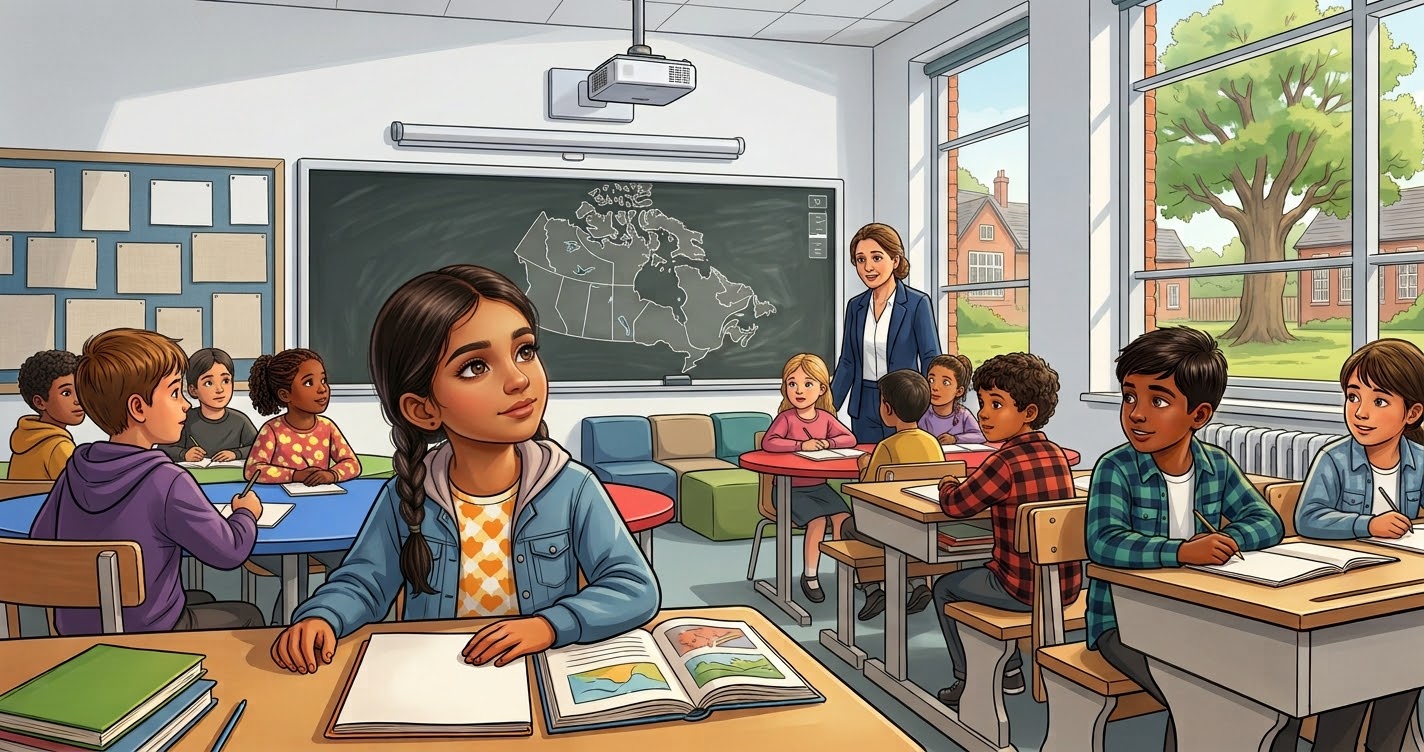
It was my second week of first grade. A teacher walked into our classroom and began reading names out loud. My name was the first one she said. It was poorly pronounced, but I paid it no mind. I assumed that eventually, they would learn how to say it properly, just as I had learned to pronounce their names.
A few of us were lined up and led down the halls to a different classroom. The teacher sat us down and handed us papers and pencils. We were having a spelling test. I got excited because I considered myself someone who was very good at spelling.
The words were easy. I quickly finished writing the last letter and looked up. In that moment, I realised something I hadn’t noticed before: every child in that room had coloured skin.
It was only later, after I told my siblings about the class, that I learned it was an EAL (English as an Additional Language) class. This made no sense to me because my first language was English. It was the only language I spoke fluently at home, and I barely even knew how to speak my parents’ language, Urdu.
I wondered whether I had been placed in that class because of the colour of my skin or because no one could say my name without hesitation. I stayed in that class for half a year, and every time I had to go, I felt terribly embarrassed. The concepts being taught to me were so simple that it felt as though I was back in kindergarten.
After months of those unnecessary morning classes, I was finally able to return to my original classroom and take part in the regular ELA lessons. I would even say that I excelled in them. I was reading books at a level usually expected of second graders.
Sometimes, I wonder whether those classes and the embarrassment I experienced were the reason I became so determined to do well in English. Perhaps it was a subconscious need to prove something: that I belonged there.
The Name I Lost Along the Way
My name is Zahra. The third letter has a sound of its own, but even I have forgotten what it feels like to pronounce my name the way it should be pronounced.
My whole life, I have been surrounded by people who rarely say my name correctly. Some call me Zara, while others call me Zahara, but rarely do I hear my actual name, Zahra. I have been told to correct people, but I have also been told there is no point because people who speak only English cannot make that particular sound.
That has always irritated me.
Over the years, I have learned how to pronounce so many names: names in French, names in German, and even names in Korean. It is a strange sort of irony that I, who was once assumed not to know English fluently, could pronounce everyone's name in my grade without stumbling, yet no one seemed able to pronounce mine.
Sometimes, learning to say someone's name correctly may seem like a small effort, but it can mean a great deal to someone who has spent years waiting to hear their name spoken the way it should be.