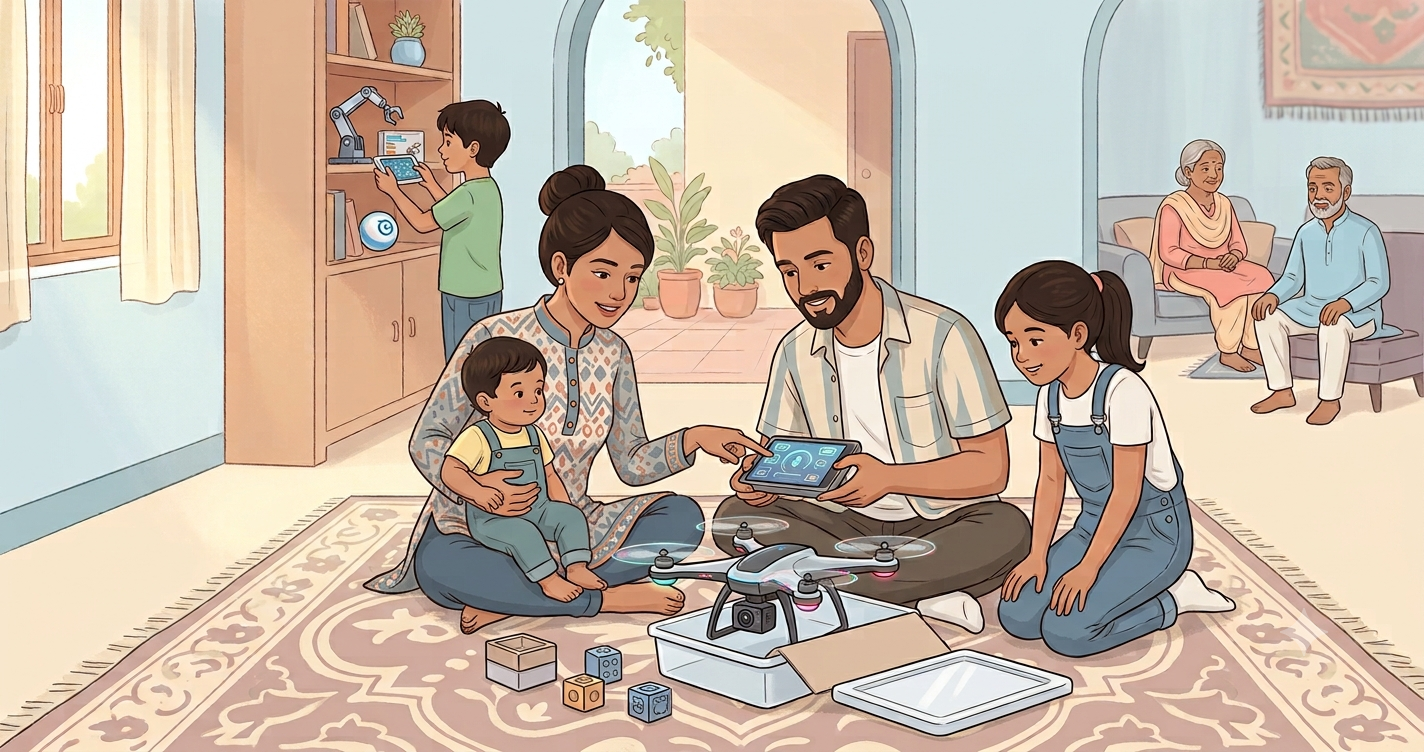
A child opens a new toy, cousins gather around, and everyone wants to begin at once. In that excited moment, an adult may miss a loose wheel, an open battery cover or a tiny piece that has fallen onto the carpet. A short pause before play gives the family time to notice these problems without turning playtime into a frightening lecture. The aim is simple: look, decide and then play.
Five minutes is not a stopwatch rule. Some toys need less time and others need a careful adult setup. What matters is building a predictable habit. Children learn that opening the box is followed by a quick check, just as washing hands comes before a meal. When the routine is calm and consistent, safety becomes part of play rather than an interruption.
Begin with the youngest child
In many South Asian homes, siblings, cousins and visiting children of different ages share the same room and toys. A construction set may suit an eight-year-old but leave small pieces within reach of a toddler. Before play begins, identify the youngest child who can enter the space. Use that child's age and abilities to decide where the game should happen, which pieces must stay out of reach and how closely an adult should supervise.
Older children can help without becoming responsible for the younger child's safety. Ask them to place small pieces on a high table, close the gate to the play area or tell an adult when a baby approaches. The adult remains in charge, while the older child learns a useful family habit.
Check the information and the toy
Start with the manufacturer's age guidance, warnings and instructions when they are available. Age guidance is not only about whether a child will enjoy the toy. It may reflect small parts, the strength needed to control it or the level of supervision required. If a local-market toy has no clear age guidance, manufacturer information or instructions, do not guess. Set it aside until reliable information can be found. If the uncertainty involves a baby, toddler, battery, magnet or other serious hazard, choose a clearer alternative.
For additional guidance, parents can consult the U.S. Consumer Product Safety Commission's toy safety information.
Next, look at the toy itself. Check for cracks, sharp edges, loose wheels, exposed wires, torn seams and pieces that detach when gently handled. Make sure battery compartments close securely and require the intended tool or fastening to open. Keep loose button or coin batteries away from children. The U.S. Consumer Product Safety Commission's guidance on button and coin batteries explains the risks and the importance of keeping these batteries away from children. Check magnetic toys for missing or loose magnets, and keep small parts away from children who may put objects in their mouths.
If a child may have swallowed a button battery or a magnet, do not wait for symptoms. Seek urgent medical care immediately and take the toy or packaging with you if possible. The UK Office for Product Safety and Standards provides guidance on the serious risks associated with small hazards such as button batteries and magnets. This is one part of the routine that should always be direct and serious.
Treat hand me downs as new arrivals
A familiar toy can feel automatically safe because it came from an older sibling or trusted relative. Time and use can still change it. Before passing on a hand-me-down, check that every part is present, the toy has not been repaired in a way that creates a new hazard, and any instructions can still be followed. Search for the manufacturer's instructions and recall notices when the brand and model are known.
The UK Office for Product Safety and Standards' guidance on second-hand goods also highlights the importance of checking used products for safety information, recalls and signs of damage or modification.
The same check applies to borrowed toys and play-date bags. The Australian Competition and Consumer Commission's Kids' Toys Guide also provides guidance for checking toys, including second-hand toys, before children use them. Agree which toys can be shared before children begin swapping pieces. Keep sets in separate containers when their parts are intended for different age groups. If an item is damaged or incomplete, place it out of play until an adult can repair it correctly or decide to discard it.
Give every child one clear instruction
Children do not need a long list of dangers. They need a sentence they can remember: stop and ask an adult if something looks loose, broken, sharp or strange. Practice the sentence when everyone is calm. Praise the child who notices a problem, even if the toy turns out to be fine. That response teaches children that asking for help does not spoil the game.
For group play, add two simple rules: take turns, and do not give a toy to a younger child without asking an adult. Adults can model the same behaviour by pausing when instructions are unclear instead of improvising. Children learn more from that example than from a warning delivered after something goes wrong.
Finish with a reset
The habit continues after play. Count pieces when practical, return batteries and accessories to their proper places, and look under sofas or cushions for anything that rolled away. Store toys with small parts or magnets where younger children cannot reach them. A quick check of the play area also helps the next play session begin smoothly.
The five-minute habit works because it fits ordinary family life. It does not require special equipment or perfect labels. It asks adults to pause, notice who is present, inspect what children will use and make one clear plan. Over time, children begin to copy the routine themselves. The best result is not fear. It is a child who knows when to stop, look and ask for help before returning to play.