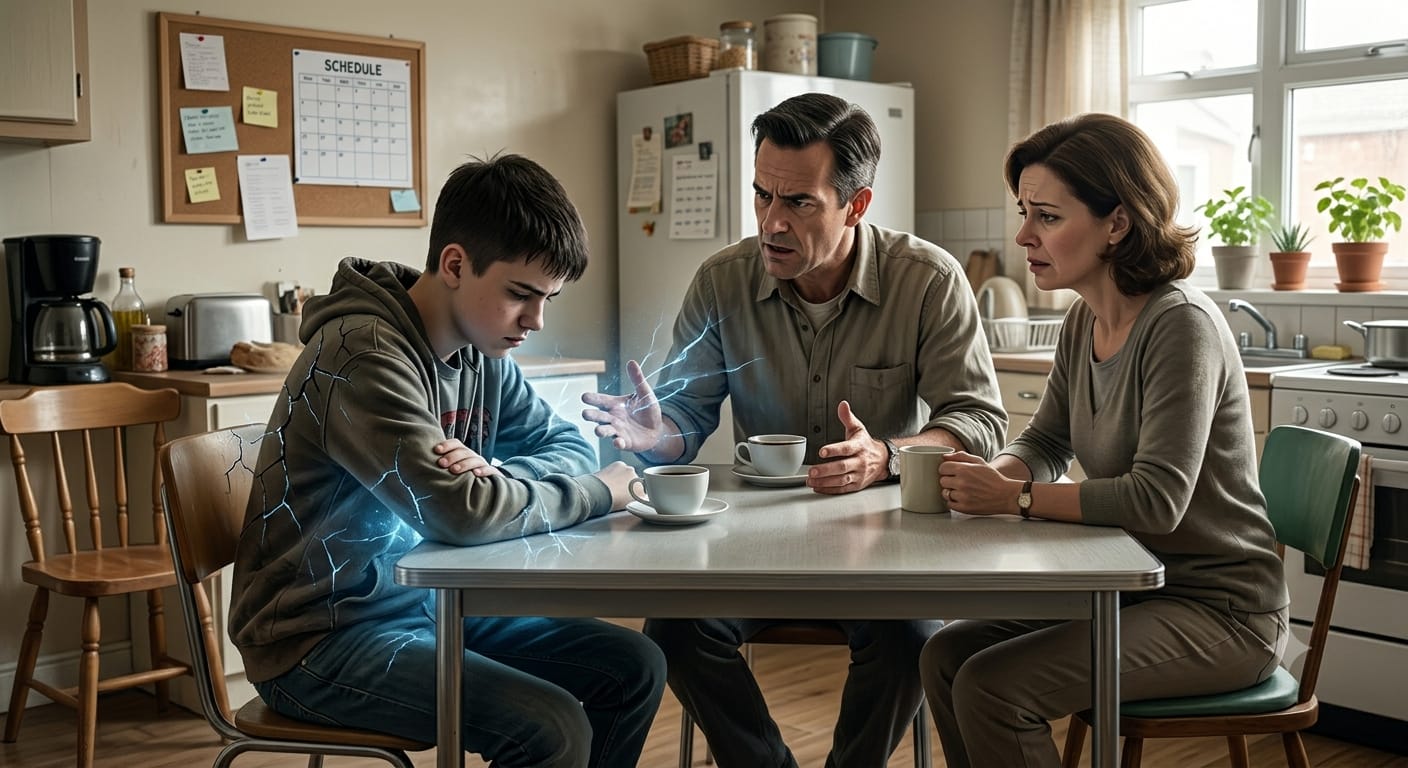
When it comes to discipline, almost every South Asian household across the subcontinent adopts the same culturally ingrained beliefs rooted in blind obedience to mold the 'perfect child'. All while boundaries are regarded as the ultimate sign of disrespect.
What is the perfect child? Is perfection achieved by such toxic narratives?
A simple answer would be; no.
The real question the adults must consider is if discipline and blind obedience are interchangeable and do boundaries really translate to rebellion or could this control later lead to problems for our children.
When Control Becomes the Parenting Model
In the ever changing tapestry of this world, control has never been the ideal model for parenting yet it is applied heavily in our region.
The drawback has always been devastating but nobody ever stops to think where it went wrong because that invites questioning our own abilities as guardians, did we mess up? What should we have done differently?
And like our predecessors, questioning our own beliefs does not come naturally to us.
If we explore into the portrayal of a 'good child' we often realise that it displays an inability to challenge pre-set systems, this child is raised on morals but never quite understands morality.
This attribute, while looks admirable to parents is not conducive for the adult of tomorrow as they are dependent on constant validation and approval.
A good child displays an inability to challenge pre-set systems; this child is raised on morals but never quite understands morality
The Doll Complex
Another thing that we fail to instill in our children is boundaries and the importance of consent, stripping away their identity until we have a controllable doll.
A therapist explored into this phenomenon and named it 'The Doll Complex' where parents project their own identity onto their offspring unable to fathom that a child can have its own identity, stripping away this child's ability to think for themselves and reducing their executive functions until they become dependent entirely for the sake of maintaining their bonds.
Why Do Some Children Become Innovators?
Now as this family grows, the parents will inevitably glamorize another child, one that they deem an innovator but they never stop to think what was different with that child, was it born with an extra brain?
Or is it because they were given a different environment to grow and evolve.
The hypocrisy unfortunately does not end there, a child with no sense of boundaries remains insecure.
This insecurity continues well into their adult life forcing them to constantly give more of themselves away, to please others yet somehow they still feel inadequate.
This injustice breeds hate and dislike, yet we struggle to break the cycle, deeming it sacrilegious all while we struggle in our daily routines.
Will We Break the Cycle?
Time after time, this model of blind discipline with no boundaries has failed, yet the question still remains; will we break the cycle or will we let this cycle break us forcing our children into the same monochromatic existence that we experienced.