We Walked So You Could Drive. So Why Does the Car Still Bother Us?
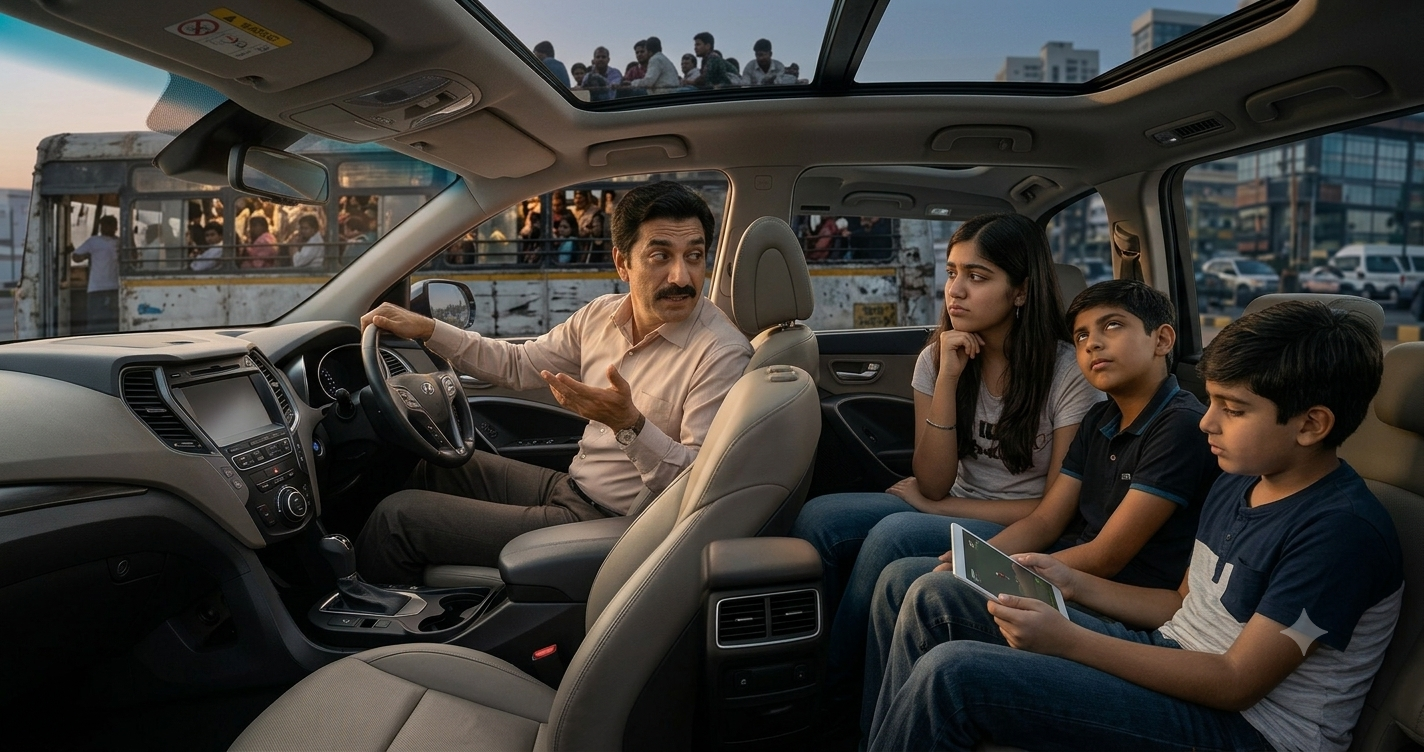
It usually happens in the car. The AC is on, the child is on their phone, and something sets it off.
"Main tumhari umar mein subah paanch bajay wagon pakarta tha. Do wagon badalni parti thi. Urdu medium school, jahan fan bhi nahin chalta tha. Aur tum AC gaari mein baith kar mooh banate ho."
The child says nothing. Every word of it is true.
The part that isn't a criticism
The sacrifice was real. A generation of Pakistani parents genuinely climbed. Government schools where the teacher didn't show up, exams sat on an empty stomach, study by emergency light. And then they gave all of it away: the car, the fee, the tuition, the room that doesn't have to be shared. They did not hoard the comfort they earned.
So why is the bus still in the room twenty five years later?
Why the story never stays in the past
They credited the wrong thing. What actually made them succeed was stubbornness, a teacher who noticed them, an opening in the economy, and a good deal of luck. But the heat is what the body remembers. So the hardship gets the credit that belongs to the character. They came to believe the bus made them, when in truth they made it through the bus.
If the suffering wasn't necessary, it was just suffering. To accept that a child can succeed without the 5 a.m. wagon is to accept that those mornings were not a training program. They were a hard childhood that nobody rescued them from. Almost no one can carry that thought about their own parents in our culture. So the pain gets converted into a qualification instead.
The fall is real. There is no safety net here. A business collapses, someone gets sick, and a family that climbed in twenty years descends in two. When a parent looks at a comfortable child, they are not seeing laziness. They are seeing someone who would not survive the descent. The lecture is fear wearing the costume of a lecture.
Dear teens! Parents are not describing your childhood. They are visiting their own. It turns out the story was never really about the bus.
What it does to the teenager
Guilt with no exit. Normal guilt can be discharged. You apologise, you fix it. This one cannot be. No one can go back and ride a wagon in 1994. Guilt with nowhere to go settles into a permanent sense of being the kind of person who takes.
Achievement that never lands. The child gets 92%. The reply comes back: "Tumhare paas to tuition thi." The head start becomes a discount applied to every result. Once a teenager works out that no score will ever be worth full price, they either burn out chasing it or stop trying altogether.
The end of honest reporting. This is the damage that lasts. If the household baseline for hardship is walking five kilometres in June, then exam panic does not qualify. Neither does a friend who turned on them, or three weeks without sleep. So they stop reporting. Not dramatically. They simply start saying theek hai to everything. And a parent who has spent twenty years establishing that their child's problems are not problems will one day wonder why the child tells them nothing.
But how can they ride a bus when there's a car outside?
They can't, and that is the trap. Hardship cannot be retro fitted. A child sent to the bus stop by a father who owns two cars is performing hardship rather than living it, and everyone in the house knows it. Real struggle has no exit. Staged struggle always does.
The better question is what the bus actually taught you. Not the heat. It taught you responsibility with real consequences, your own money to manage, and problems that nobody was coming to solve for you. All of that can be handed to a child inside a house with a car.
Give them a fixed monthly amount to manage, including the mistakes. Let consequences arrive uninterrupted: the missed deadline, the lost phone. Hand over work the household genuinely depends on, like the bills, the bank, the NADRA queue. Let them earn from one job of their own. And tell the story once, warmly, with no bill attached to it.
"Let me tell you what my life was like at your age" builds respect. "Do you know what I went through while you sit here?" builds distance. Same facts, opposite outcomes.